
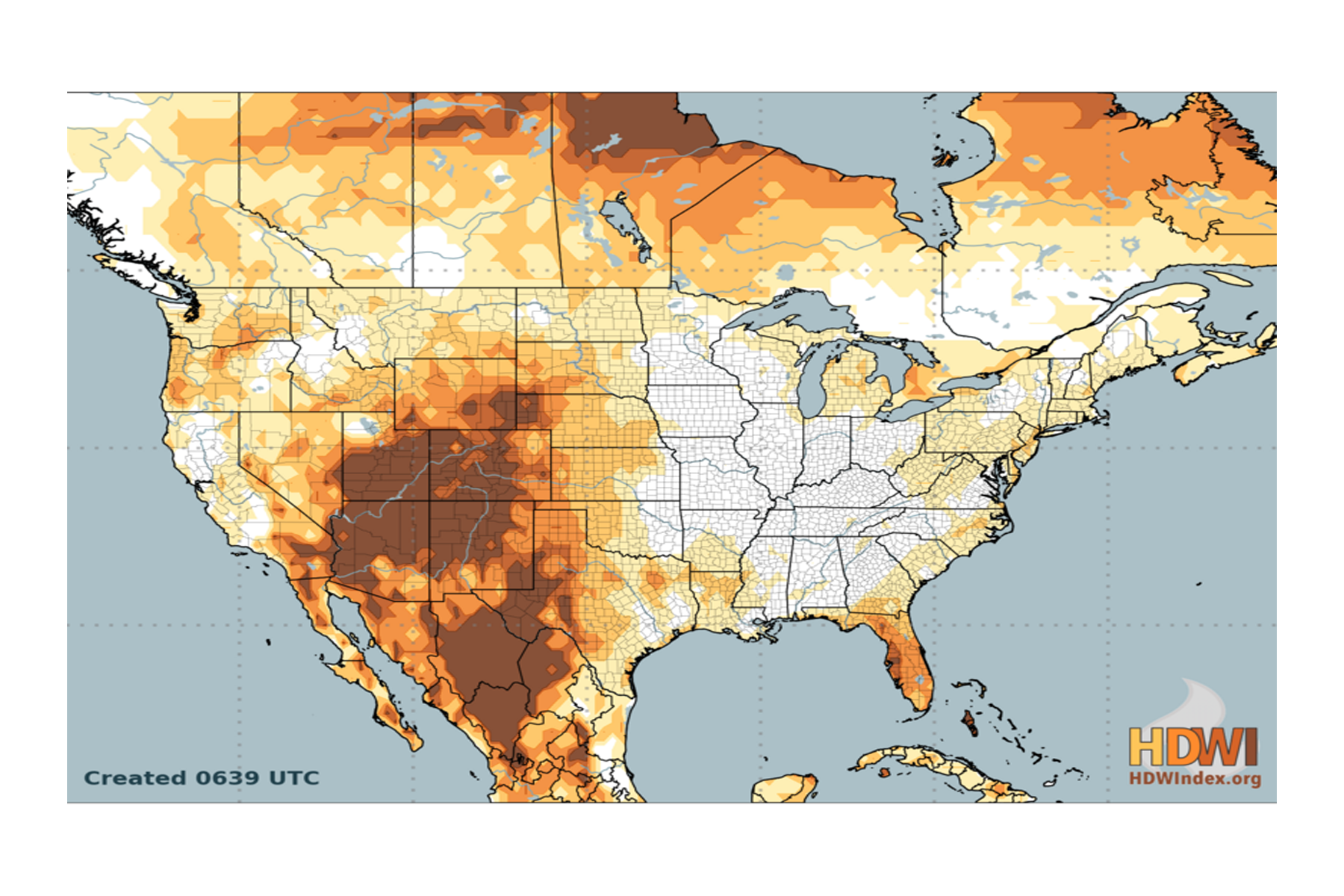
The Hot-Dry-Windy Index (HDWI), a meteorological parameter used by fire managers to assess the daily potential for rapid wildfire spread. It generates HDWI maps, forecasts, and climatology data based on atmospheric conditions to help predict critical fire weather periods.
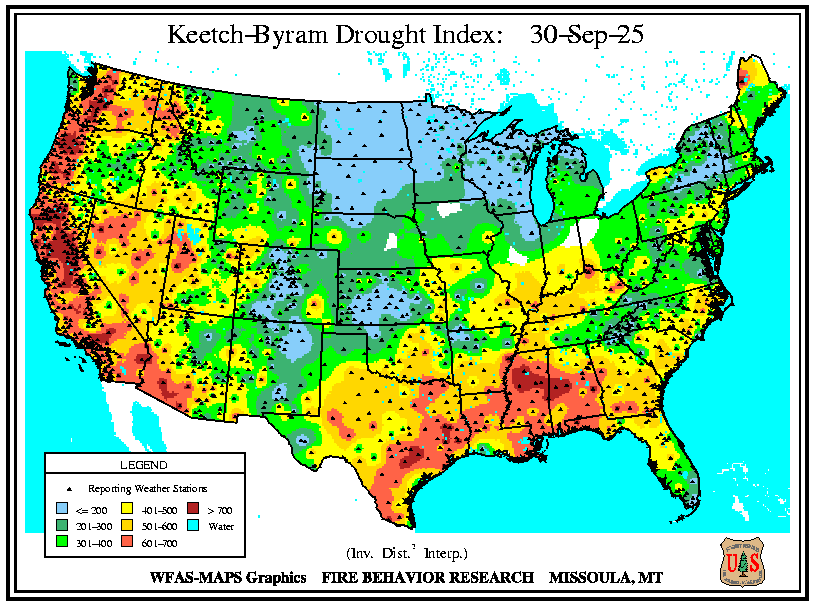
The Keetch-Byram Drought Index (KBDI) is a number ranging from 0 to 800 that estimates the cumulative soil moisture deficit, which is used primarily to assess wildfire potential. A score of at least 600 is associated with increased wildfire occurence and deep burning fires.
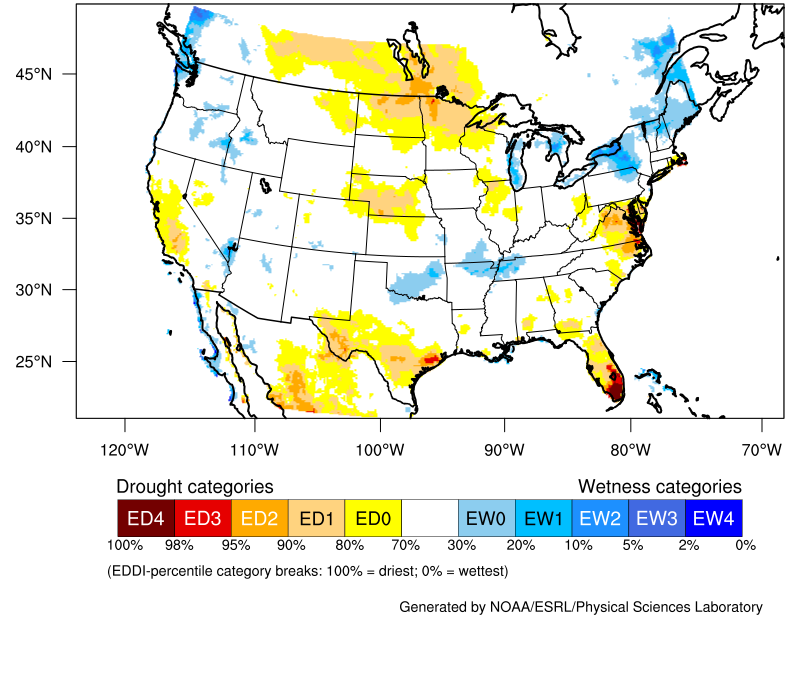
The Evaporative Demand Drought Index (EDDI) is an experimental tool that monitors drought by examining how unusually high or low the atmospheric evaporative demand is for a given area over a specific time period. It can offer early warning of fire weather risk.
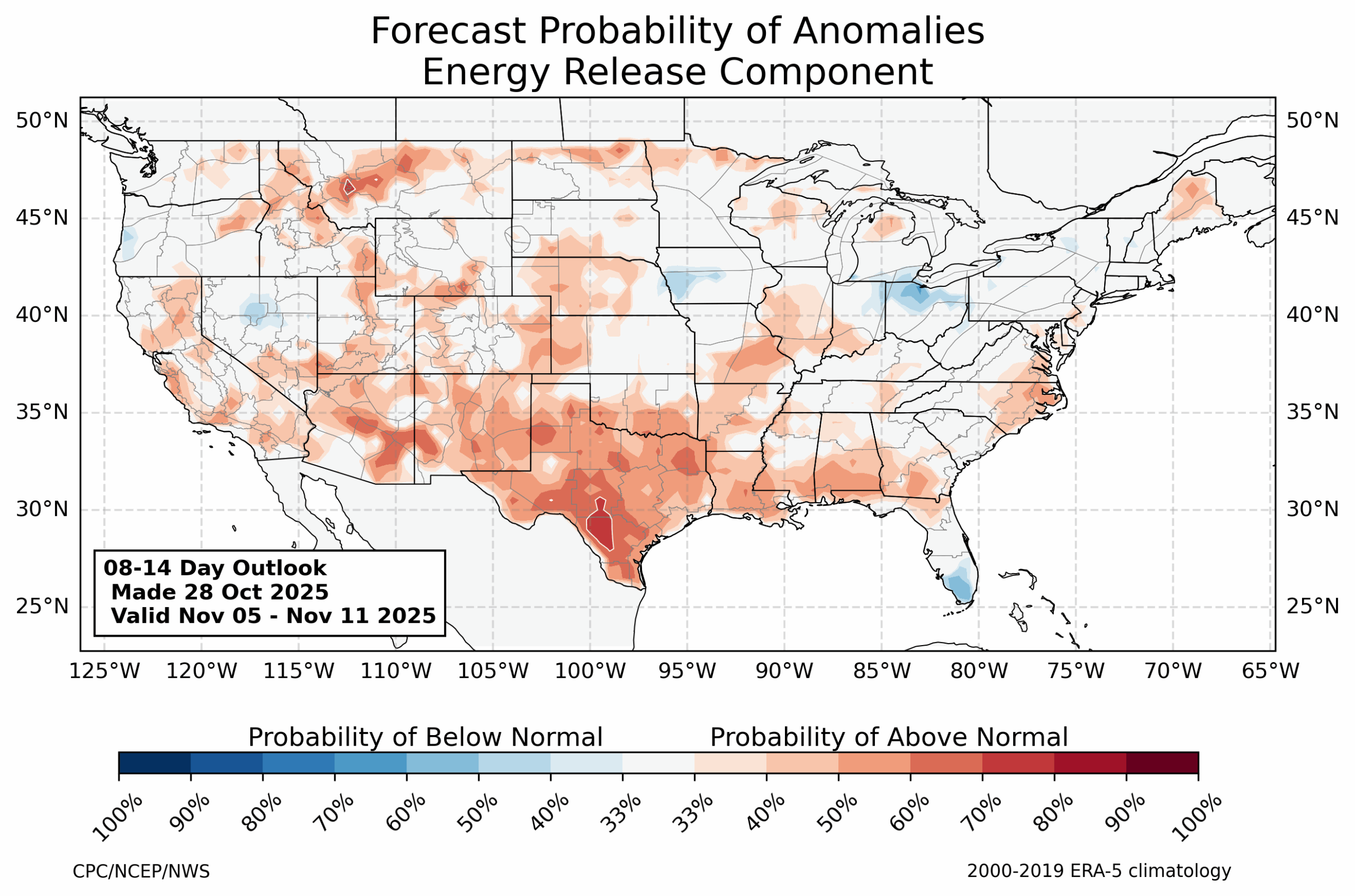
The Energy Release Components (ERC) refers to an index in wildland fire management that represents the potential energy (BTU) available for release per unit area within the flaming front of a fire. It’s a cumulative measure that reflects the dryness of all live and dead fuels, making it a key indicator of seasonal fire potential and drought conditions.
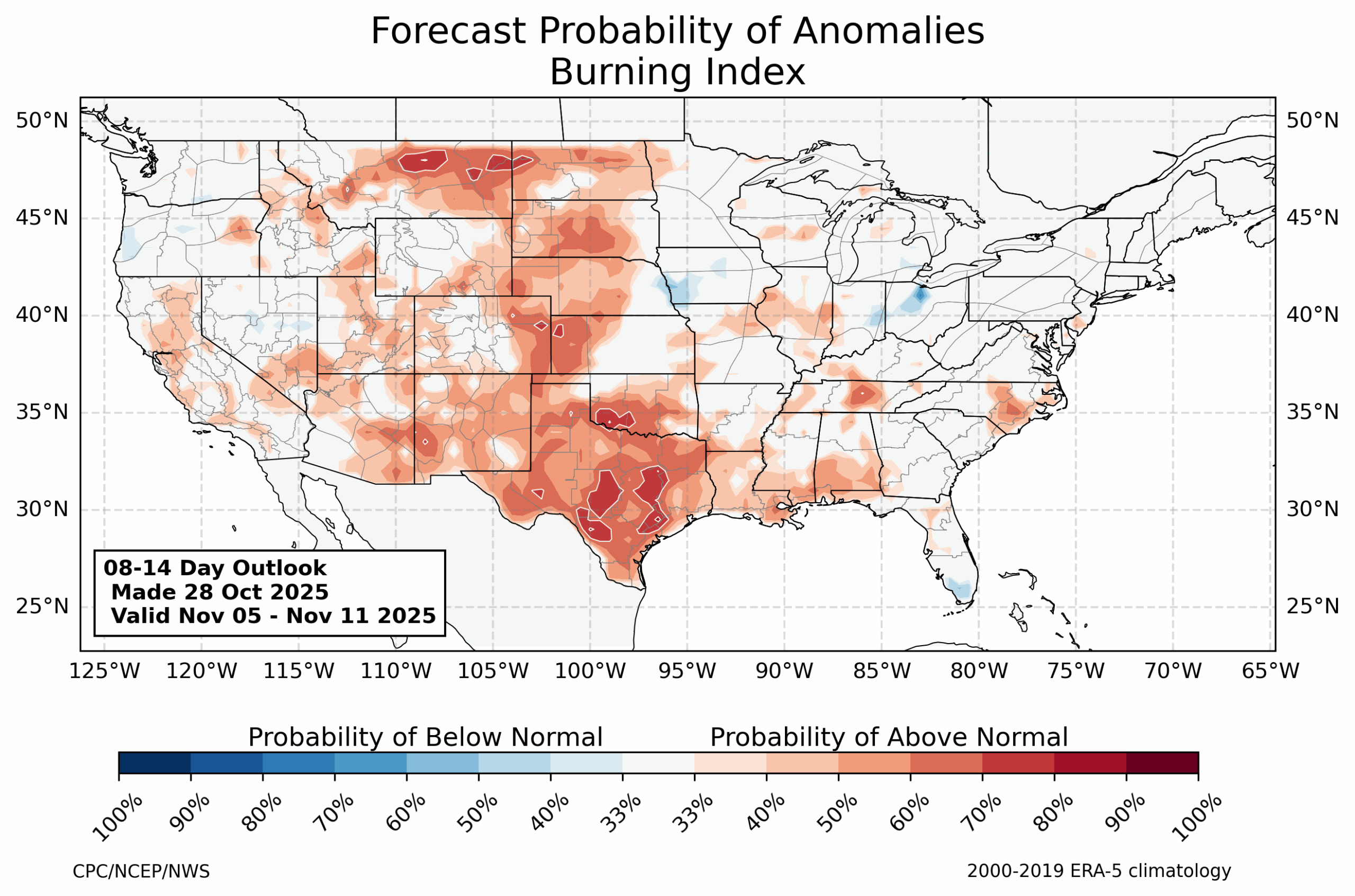
The Burning Index (BI) is a composite number used in wildland fire management that rates the anticipated difficulty of controlling a fire. It is calculated by combining the Spread Component (how fast a fire will spread) and the Energy Release Component (the fire’s potential energy), and it is roughly equivalent to ten times the expected flame length in feet.
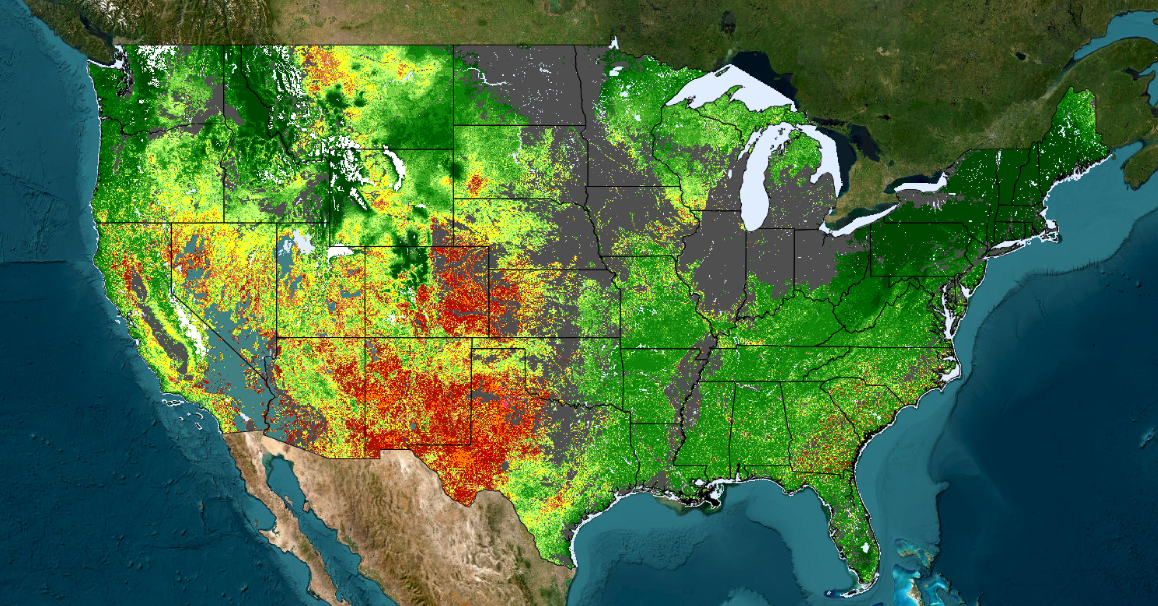
The Wildland Fire Potential Index (WFPI) is developed using an algorithim that describes the ratio of live to dead fuel and includes variables for wind speed, dry bulb temperature, and rainfall.
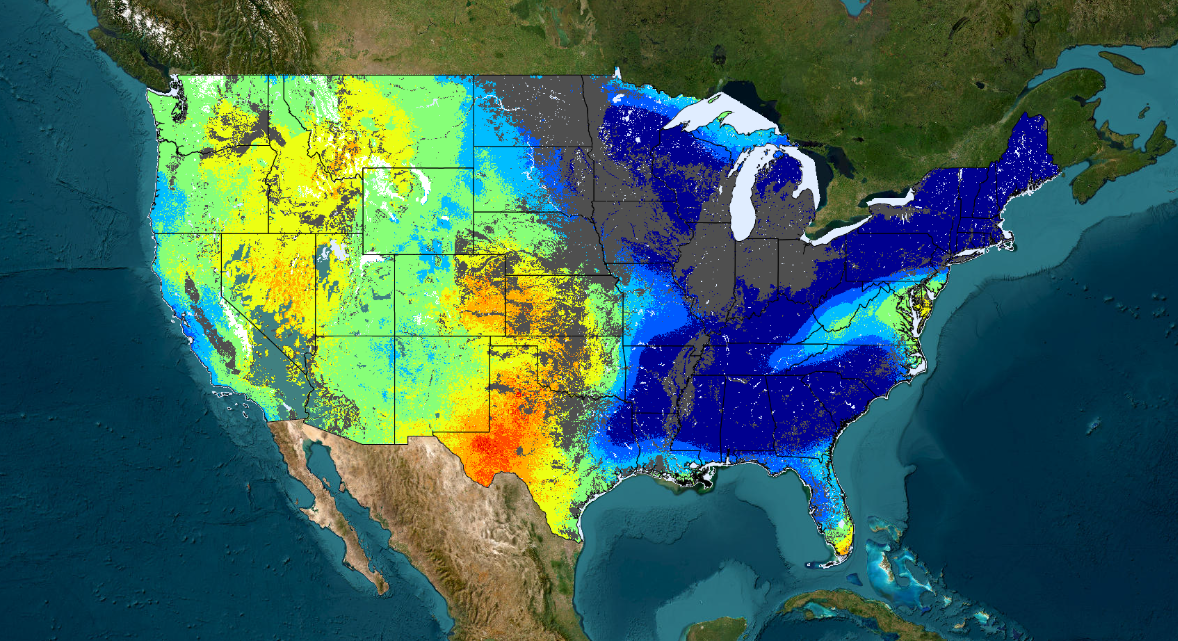
The Wildland Large Fire Probability (WLFP) is an product that represents the probability of a large fire (>500 acres) occurring for a specific time and location. It is based on a statistical model that incorporates Wildland Fire Potential Index (WFPI) and historical fire activity.
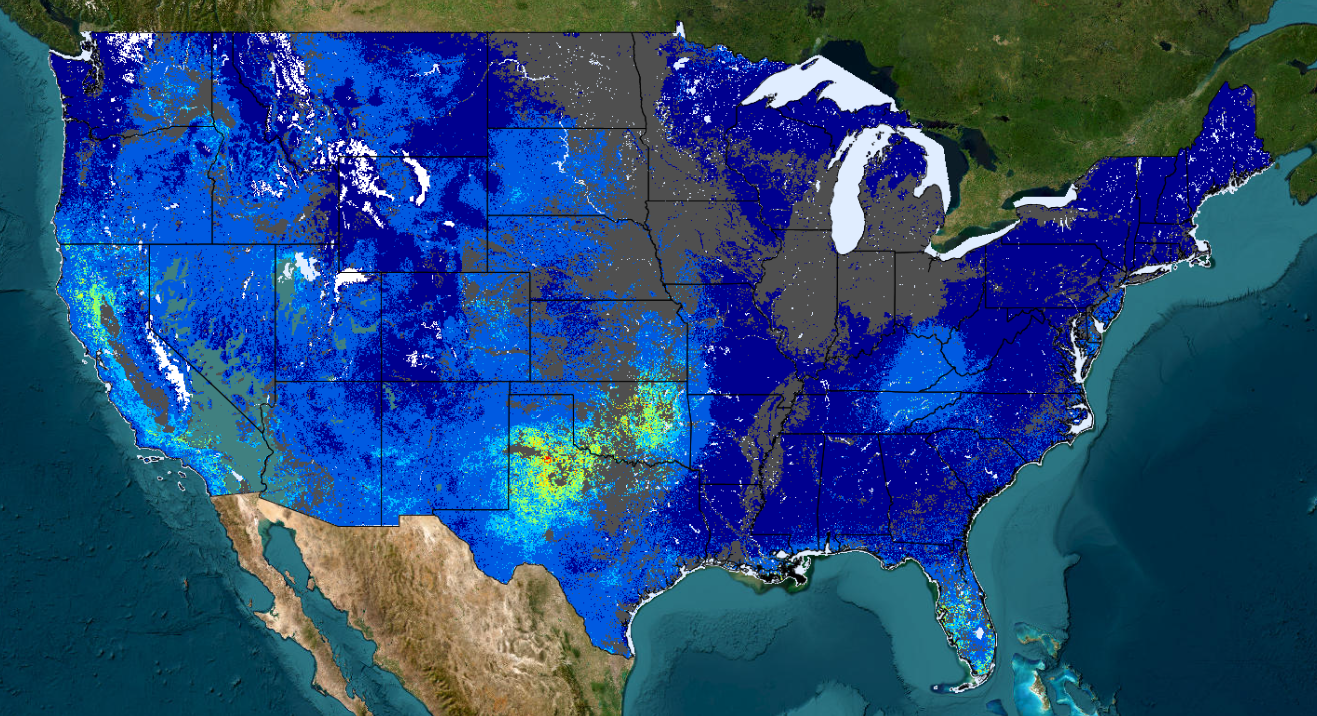
The Wildland Fire Spread Probability (WLFP) is an product that indicates the statistical probably that an existing one-acre fire will escape initial control efforts and grow to be a large fire (>500 acres). It is based on a historical ignitions data and their relationship to WFPI.